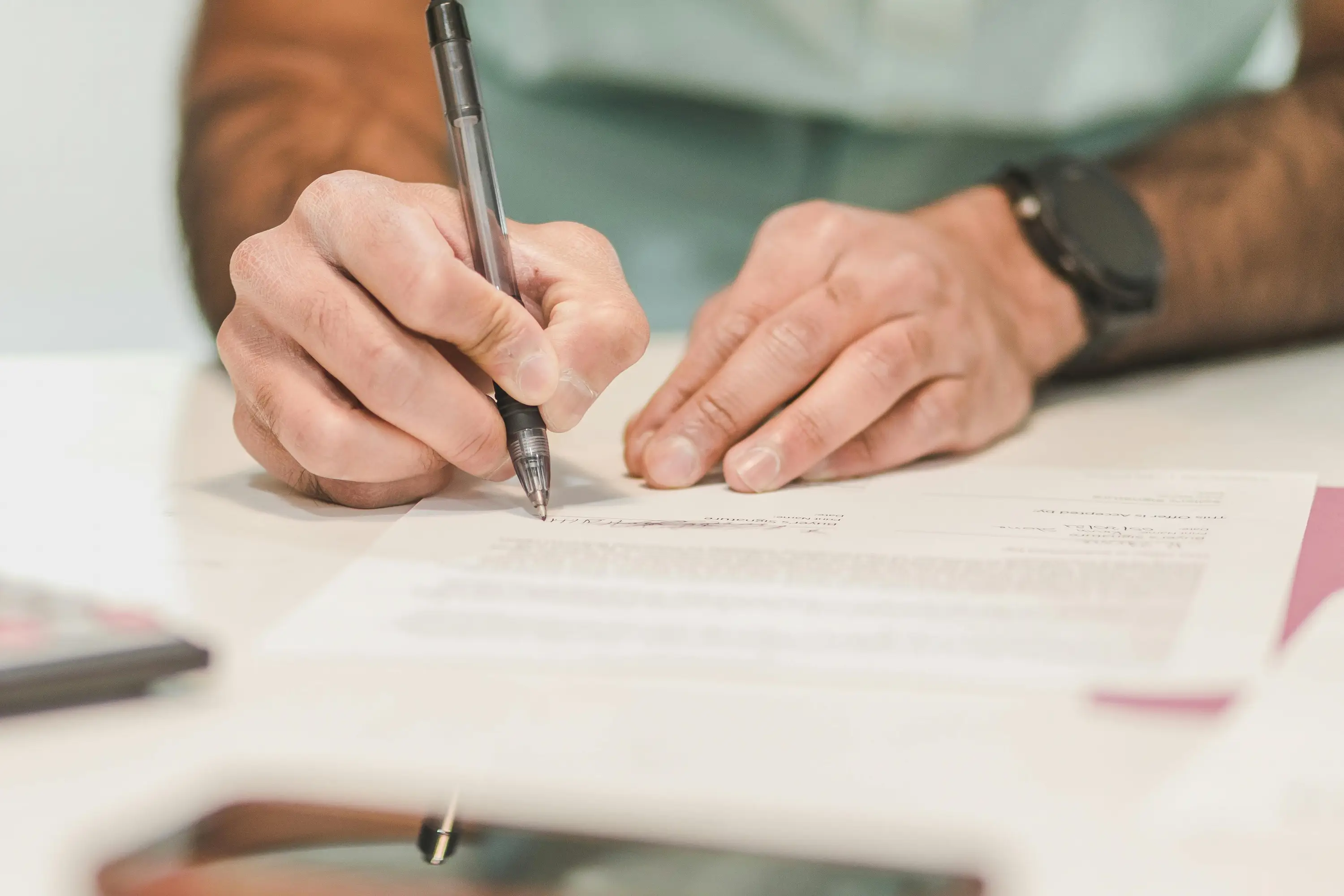


We support our clients at every stage: from negotiating and drafting the agreement through to its performance.
We stand alongside our clients to guide them in putting in place the effective, technically sound contractual structures needed to protect their services.
Clarity, precision and rigour: the contracts we draft are recognised for minimising the risk of disputes between the parties.
We handle all types of commercial contracts, including franchise agreements, partnership agreements, sales contracts, business introducer agreements, service agreements, agency mandates, etc.
We also have in-depth knowledge of new technologies: SaaS contracts, licence agreements and software management contracts.
In the event of a dispute, our lawyers stand by you at every stage: pre-litigation and litigation negotiations, mediation, interim proceedings and proceedings on the merits throughout France. We implement effective procedural strategies.
Frequently asked questions on contract law
What are the conditions for a contract to be valid?
Since the 2016 reform of French contract law, a contract is valid if it meets three conditions: the consent of the parties (which must be free and informed, and not vitiated by defects such as mistake, fraud or duress); the parties' capacity to contract; and lawful and certain content (a determinable subject matter and a lawful cause). If any of these conditions is missing, the contract may be annulled.
What is force majeure and what effect does it have on the performance of a contract?
Force majeure is an event that is unforeseeable, irresistible and beyond the control of the parties, and which makes performance of the contract impossible. Under Article 1218 of the French Civil Code, if the impediment is temporary, performance is suspended; if it is permanent, the contract is automatically terminated. The party prevented from performing is released from liability and is not required to pay damages. It must notify the other party as soon as possible.
How can a commercial contract be terminated without incurring liability for damages?
There are several ways to terminate a commercial contract without risking damages: relying on the other party's non-performance by serving formal notice on it to perform and then terminating the contract unilaterally at the defaulting party's risk; relying on a termination clause provided for in the contract; or negotiating an amicable termination. For contracts of indefinite duration, reasonable notice is mandatory, failing which liability for wrongful termination may be incurred.
A project or dispute involving contract law?
Contract law: formation, validity, obligations and disputes. Secure your agreements and manage your contractual relationships effectively.