
NOVLAW AVOCATS: a partner in France’s energy transition and reindustrialisation
The energy and infrastructure sector lies at the heart of today’s strategic challenges: ecological transition, energy sovereignty, industrial sovereignty, digital sovereignty, economic development and regional planning.
The complexity of the regulations, which combine public and private law, and the constant evolution of the legal and regulatory frameworks call for in-depth expertise.
NOVLAW AVOCATS (Laurent Bidault) helps private, public and semi-public stakeholders (developers, manufacturers, investors, local authorities) secure their projects legally, from the feasibility study through design and construction to operation, in both advisory and litigation matters.
Our advisory expertise
NOVLAW AVOCATS acts at every stage of a project to ensure its legal feasibility, structuring and performance.
Developing renewable and conventional energy projects
We assist you in structuring and delivering your energy generation projects:
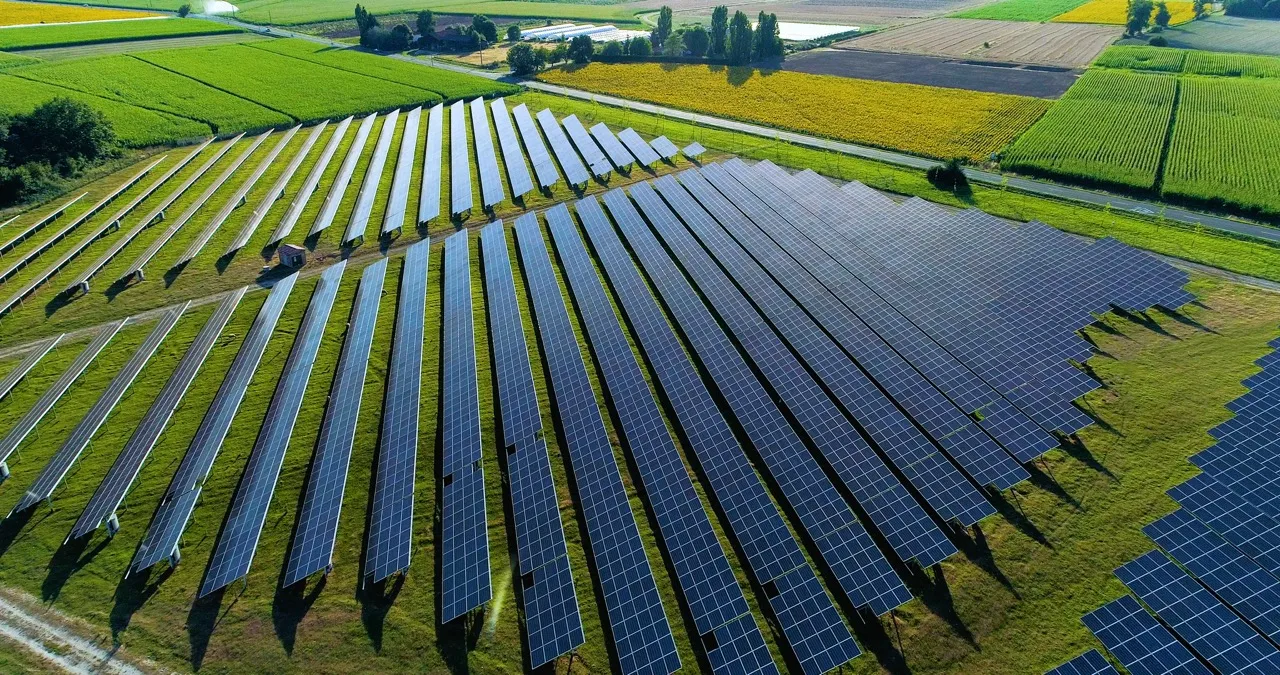
- Solar: photovoltaic installations (solar panels), solar car park canopies, agrivoltaics, rooftop installations.
- Wind: onshore and offshore wind farms.
- New energies: hydrogen, biogas, anaerobic digestion…
- Conventional energy and networks: power plants, storage units, cogeneration.
Our work covers in particular:
- Legal and land audit of the project: feasibility analysis, risk analysis, securing land (leases, promises to sell).
- Administrative authorisations (permitting): we manage the entire authorisation process (building permits, environmental authorisation, ICPE, declaration of public utility – DUP) to ensure the project is legally robust.
- Negotiating and drafting key contracts: power purchase agreements (PPA), engineering, procurement and construction (EPC) contracts, operation and maintenance (O&M) contracts, public procurement contracts (public contracts, concession contracts)
- Project finance: regulatory due diligence, assistance in negotiating financing documentation through our partners.
Industrial projects and turnkey sites
As partners in industrial sovereignty, we support project sponsors in establishing and expanding production sites, with particular expertise in the public schemes designed to fast-track such projects:
- Major National Interest Industrial Projects (PIINM): We provide full support for industrial location projects and projects designated as PIINM, which benefit from fast-track procedures for aligning planning documents and for the issue of authorisations by the State.
- “France 2030” and turnkey sites: We legally secure establishment on pre-developed sites, working with local authorities, public authorities and developers.
- Industrial environmental law: We handle ICPE issues (installations classified for environmental protection), impact assessments, emissions regulations and waste management.
- State aid and subsidies: We advise you on eligibility for and access to public funding for reindustrialisation and innovation (in particular under the France 2030 programme or from semi-public bodies such as BPIFrance).
Structuring project companies and public-private arrangements
Large-scale projects often require the creation of dedicated legal structures combining public and private capital.
In this context, we advise our clients on:
- Setting up project companies (SPVs – special purpose vehicles) to hold one or more assets.
- Structuring public-private partnership projects, in particular through semi-public companies (SEM) or local public companies (SPL).
- Drafting corporate documentation and shareholders’ agreements.
Infrastructure, networks and strategic facilities
Project performance and the connectivity of local areas depend on robust and efficient infrastructure.
NOVLAW AVOCATS advises its clients in the following areas:
- Energy networks: connection to transmission and distribution networks.
- Digital infrastructure: establishing and operating data centres, electronic communications networks (fibre optics, 5G) and passive infrastructure (masts, etc.).
- Transport infrastructure: electric vehicle charging points (IRVE), public transport infrastructure.
- Public property: temporary occupation agreements (AOT), management of easements.
- Planning and development: aligning projects with planning documents (PLU, SCoT).

Our litigation expertise
In an environment where disputes are frequent, NOVLAW AVOCATS defends its clients’ interests before the competent courts.
Litigation over administrative authorisations
We represent you to defend authorisations obtained or to challenge refusals:
- Urgent applications and actions for annulment against refusals of building permits, environmental authorisations or operating authorisations.
- Defending authorisations obtained against third-party challenges (associations, local residents), including under fast-track procedures for major projects.
- Handling litigation relating to planning documents.
Contractual and performance disputes
We help resolve disputes arising during the life of projects:
- Disputes relating to the performance of construction contracts (delays, defects).
- Liability disputes between the various parties involved.
- Disputes relating to the interpretation or termination of land leases or PPAs.
Proceedings before regulatory authorities
The firm assists you in your dealings with the regulatory authorities (CRE, ARCEP) and in disputes relating to:
- Network access conditions (TURPE, etc.).
- Administrative penalties.
- Disputes relating to market mechanisms.

Why choose NOVLAW AVOCATS?
Cross-disciplinary legal expertise:
Our expertise in public business law, planning law and environmental law allows us to offer you a 360° legal view of your projects.
A strategic vision:
We are partners who understand your operational and financial objectives and offer you pragmatic, secure solutions.
Sector knowledge:
We constantly monitor regulatory developments to provide advice at the cutting edge of sector issues, particularly in energy, industry and telecoms.
Committed to the ecosystems:
NOVLAW is a member of the Tenerrdis competitiveness cluster (energy transition) and the Smart Building Alliance (SBA), keeping us close to the innovations and key players in these sectors.
Committed to our clients:
We stand by you with responsiveness and determination to bring your projects to fruition and defend your interests.
{{cta-inject-1}}
Expertise and support at every stage of a project’s life cycle
1 Securing the land
Land acquisition, negotiation, buildability and feasibility studies, analysis of regulatory constraints.
2 Project programming and definition
Audit of planning rules (PLU), planning permissions, assistance in selecting the design team (maître d’œuvre).
3 Project design
Monitoring design team contracts, analysis of the project’s legal feasibility.
4 Selecting contractors and other parties
Legal project management assistance (AMO), drafting contracts and tender documents, competitive tendering, analysis of applications and bids, handling disputes relating to contract award
5 Monitoring the construction works
Monitoring and managing the performance of
the project and contracts: subcontracting, delays, additional works, contractor default, termination…
6 Acceptance of works
Assistance with the acceptance of works and services, financial management of project completion: final account, compensation claims from the parties involved…
7 Enforcing warranties
Managing post-acceptance defects, enforcing warranties (one-year completion warranty (GPA), two-year and ten-year warranties).
8 Refurbishment / demolition
Analysis of legal feasibility, assistance with the award and performance of service providers’ contracts.
Contact us for an initial opinion on your project
Are you a project sponsor, an investor or a local authority? Are you facing a dispute or looking to secure your development legally? Contact NOVLAW AVOCATS (Laurent Bidault) to discuss your situation.
Frequently asked questions on energy and infrastructure law
Can a third-party challenge halt construction work, and can the permit still be regularised?
A third-party challenge does not in itself have suspensive effect, but it opens the way to an application for suspension in summary proceedings (référé-suspension), in which urgency is presumed in the case of a planning authorisation (Article L. 600-3 of the French Planning Code (code de l'urbanisme)), a presumption the Conseil d'État has just extended to the withdrawal of an authorisation (CE, 17 June 2026, No. 513099). This presumption remains rebuttable: the court has, for example, already accepted that the public interest in the deployment of renewable energy may rule out urgency (CE, 17 January 2024, No. 467572). Proper and continuous posting of the permit on site, recorded by a commissaire de justice (judicial officer), remains the first line of protection: it starts the two-month time limit running. Finally, a defect is not necessarily fatal: the permit may be regularised during the proceedings by an amending permit, including in the light of new rules or circumstances (CE, 23 October 2025, Commune de Montriond, No. 492924).
Since 1 July 2026, which court hears disputes over a strategic energy project, and within what time limits?
Decree No. 2026-302 of 21 April 2026 created a special litigation regime for environmental projects of strategic importance. Challenges are brought directly before the administrative court of appeal, which has jurisdiction at first and last instance (Article R. 311-5 of the French Code of Administrative Justice), its judgment being open only to an appeal on points of law. The court rules within ten months. The challenge must be notified to the author of the decision and to the beneficiary within fifteen clear days, failing which it is inadmissible, and a prior administrative appeal does not extend the time limit. The regime covers in particular photovoltaic installations of at least 5 MW, hydroelectric installations of at least 1 MW, onshore wind, anaerobic digestion, grid connection works, transport infrastructure of more than €5 million excluding VAT and projects of major national interest. The regime only applies to acts adopted on or after 1 July 2026. If the project is not strategic, the first-instance administrative court (tribunal administratif) has jurisdiction.
What should you do if a building permit or other authorisation is refused?
The law on simplifying planning and housing law of 26 November 2025 has profoundly changed appeal strategy. An informal appeal (recours gracieux) or hierarchical appeal must now be lodged within one month and, above all, it no longer extends the time limit for bringing proceedings before the court (Article L. 600-12-2 of the French Planning Code): applying to the administrative court within two months of notification of the refusal has become essential. In return, the administration can no longer rely on new grounds for refusal more than two months after the appeal has been registered (Article L. 600-2), and an application for suspension (référé-suspension) of a refusal benefits from a presumption of urgency (Article L. 600-3-1), making it possible to obtain a decision within a few weeks. An unlawful refusal may also give rise to compensation for the study costs incurred and the delay suffered, following a prior claim.
Is my car park subject to the obligation to install solar panels?
Article 40 of the APER Law of 10 March 2023 requires at least half of the surface area of outdoor car parks of more than 1,500 m² to be shaded. The timetable is staggered: the obligation has applied since 1 July 2026 to car parks of at least 10,000 m², and will apply from 1 July 2028 to those between 1,500 and 10,000 m². For car parks operated under a concession or public service delegation, the deadline is linked to the conclusion or renewal of the contract. The simplification law of 26 November 2025 relaxed the implementation arrangements: the obligation is deemed to be met by mixed solutions, provided that solar canopies cover at least 35% of the half to be shaded, the remainder being planted with vegetation. It also allowed a postponement upon proof of a commitment contract and prohibited the local urban plan (PLU) from obstructing these installations. Penalties can reach €40,000 per year.
Can an industrial or infrastructure project benefit from a fast-track procedure?
Yes, through classification as a project of major national interest (Article L. 300-6-2 of the French Planning Code, introduced by the Green Industry Law of 23 October 2023). The classification is made by decree. It allows the State itself to initiate and carry out the process of bringing planning documents into line with the project, adopted by decree, with the prior agreement of the mayor or the president of the EPCI (inter-municipal body), such agreement being deemed given in the absence of a response within one month. Planning authorisations are then issued by the State rather than by the municipality (Article L. 422-2 h)). The Conseil d'État exercises full review of this classification (CE, 6 February 2026, No. 500384). The mechanism, initially reserved for industrial projects, was extended by the Law of 16 August 2026 to infrastructure projects, data centres and defence projects.
What planning rules apply to the siting of a data centre?
From a planning perspective, the Order of 22 March 2023 classifies data centres in the 'warehouse' (entrepôt) sub-category of use. This classification determines whether building is permitted under the local urban plan (PLU), without, however, making the project liable for the charge on the creation of storage premises (CE, 11 October 2022, No. 463134). In the Île-de-France region, prefectoral approval is required above 5,000 m² of floor area (Articles R. 510-1 and R. 510-6 of the French Planning Code) and must be attached to the building permit application. From an environmental perspective, there is no ICPE (classified installations for environmental protection) heading specific to data centres: classification results from the technical equipment (generators, chillers, fuel oil tanks). Since Law No. 2026-791 of 16 August 2026, data centres may also be classified as projects of major national interest, subject to enhanced scrutiny in areas where water resources are under pressure.
Above what threshold is an energy project subject to an environmental assessment?
The table annexed to Article R. 122-2 of the French Environmental Code distinguishes three situations: systematic assessment, case-by-case review, or no formality below the thresholds. For ground-mounted photovoltaic installations, case-by-case review applies from 300 kWp; the threshold for systematic assessment, long set at 1 MWp, was raised to 3 MWp by Decree No. 2026-674 of 27 July 2026, for projects submitted to the competent authority since 28 July 2026. The environmental authority has thirty-five days to rule on a case-by-case review, its silence amounting to an obligation to carry out the assessment. Even below the thresholds, the safety-net clause in Article R. 122-2-1 allows the authority examining the application to subject a project to review. The stakes are high: a missing or manifestly inadequate impact assessment may give grounds for the court to suspend the authorisation (Article L. 122-2).
How do the building permit, environmental authorisation and ICPE regime fit together?
These are three separate authorisations, issued by different authorities, and their sequencing determines the project timetable. The environmental authorisation (Article L. 181-1 of the French Environmental Code) is a single permit that incorporates, among other things, the ICPE authorisation (classified installations for environmental protection), the protected species derogation, the Natura 2000 assessment and the land clearance authorisation. It does not dispense with the need for a building permit: the latter may be issued in parallel, but it cannot be implemented before the environmental authorisation has been obtained (Article L. 181-30). In practice, the review of an environmental authorisation application frequently takes more than a year, compared with three months for an ordinary building permit. Onshore wind turbines are an exception: they are exempt from planning authorisation (Article R. 425-29-2 of the French Planning Code) and are subject only to the environmental authorisation. Poorly calibrated sequencing is one of the leading causes of schedule overruns on renewable energy and industrial projects.
What planning authorisations are needed for a ground-mounted solar farm?
The regime depends on the peak power and height of the installation, according to the grid introduced by Decree No. 2024-1023 of 13 November 2024, applicable to applications filed since 1 December 2024. Ground-mounted installations and solar canopies of less than 3 kWp whose maximum height does not exceed 1.80 m are exempt from any formality (Article R. 421-2 c) of the French Planning Code). Installations of less than 3 kWp exceeding 1.80 m, as well as all those with a power output between 3 kWp and 3 MWp, regardless of height, require a prior declaration (Article R. 421-9 h)). Above 3 MWp, a building permit is required. Note: in remarkable heritage sites, in the vicinity of historic monuments and in listed sites, a building permit is once again required regardless of power output. A rooftop installation on an existing building, for its part, requires a prior declaration (Article R. 421-17).
How can the applicable planning rules be frozen before starting a project?
By means of an operational planning certificate (certificat d'urbanisme opérationnel). Issued under Article L. 410-1 of the French Planning Code, it sets out the planning rules, the administrative limitations on property rights and the taxes payable, and states whether the proposed operation is feasible. Its main advantage is crystallisation: for eighteen months from its issue, an application for authorisation filed for the same land is examined in the light of the rules in force on the date of the certificate (CE, 18 December 2017, Danglot, No. 380438). There are only two exceptions: public safety and health rules, and the entry into force of a planning document that already justified a deferral of decision (sursis à statuer). The review takes two months for the operational certificate and one month for the information certificate, and the certificate may be extended for one year on application made two months before it expires.
What legal remedies are available against an energy supplier that fails to honour its contract?
When faced with a defaulting energy supplier (unfair billing, unjustified disconnection, failure to comply with contractual terms), several remedies are available: a written complaint to customer service, then a referral to the National Energy Ombudsman (médiateur national de l'énergie), whose opinions are binding on suppliers under certain conditions, and finally legal action before the judicial court (tribunal judiciaire) for individuals or the commercial court for businesses. The CRE (Energy Regulatory Commission) may also be approached regarding regulatory breaches.
What are the obligations of renewable energy producers in France?
Renewable energy producers (solar, wind, hydroelectric) are subject to various obligations: obtaining the necessary administrative authorisations (building permit, operating authorisation), connecting to the public grid under the conditions set by Enedis or RTE, complying with the purchase or additional remuneration (complément de rémunération) conditions set by ministerial order, and reporting their output to the CRE (French Energy Regulatory Commission). They may benefit from public support mechanisms (purchase obligation, calls for tenders).
What is an energy distribution concession and how is it regulated?
An energy distribution concession is a contract whereby a granting authority (a municipality or an energy syndicate) delegates to an operator (Enedis for electricity, GRTgaz for gas) the management and operation of the distribution networks. These concessions are governed by the French Energy Code and are subject to standard specifications laid down by decree. They generally run for 30 years, and the granting authority is responsible for supervising the concessionaire.
Can a solar farm be installed on agricultural land?
Yes, but under strict conditions. An installation qualifying as agrivoltaic within the meaning of Article L. 314-36 of the French Energy Code is deemed necessary for agricultural use and may therefore be built in zone A (Article L. 111-27 of the French Planning Code). The decree of 8 April 2024 requires significant agricultural production and a sustainable income, a yield of at least 90% of that of the control area (excluding livestock farming), the provision of at least one of the four services to the plot (agronomic potential, climate adaptation, protection against hazards, animal welfare), an area rendered unusable of less than 10%, and the reversibility of the installation. Without agrivoltaic status, the installation is only permitted in zone A, N or F (agricultural, natural or forest) if it is included in the prefectoral framework document, does not cause lasting damage to the soil and remains compatible with agricultural activity. Authorisation is limited to forty years and the permit is issued by the prefect.
Is a competitive procedure required to occupy the public domain?
In principle, yes. Article L. 2122-1-1 of the General Code of Public Property (code général de la propriété des personnes publiques), introduced by the ordinance of 19 April 2017, requires a prior advertising and selection procedure whenever the permit allows economic exploitation, which is the case for a charging point, a pylon or a solar power plant on a public roof. The duration of the permit must be set according to the amortisation of the investments and a fair return on the capital committed (Article L. 2122-2). Exemptions exist: permit already granted under a public procurement contract that was put out to competition, urgency for a permit of one year or less, sole occupant by law, in-house arrangement (quasi-régie), unsuccessful procedure, or particular characteristics of the property (Articles L. 2122-1-2 and L. 2122-1-3). Electronic communications networks open to the public benefit from a specific exemption (Article L. 2122-1-3-1). An unsuccessful candidate has access neither to pre-contractual nor to contractual interim relief, but may bring an action challenging the validity of the permit, which may be combined with an application for interim suspension (référé-suspension).
A project or dispute in energy and infrastructure law?
Secure your energy and infrastructure projects with a specialist lawyer: advice, contracts and risk management.