Planning and Building Permit Lawyer Strasbourg Metz Nancy
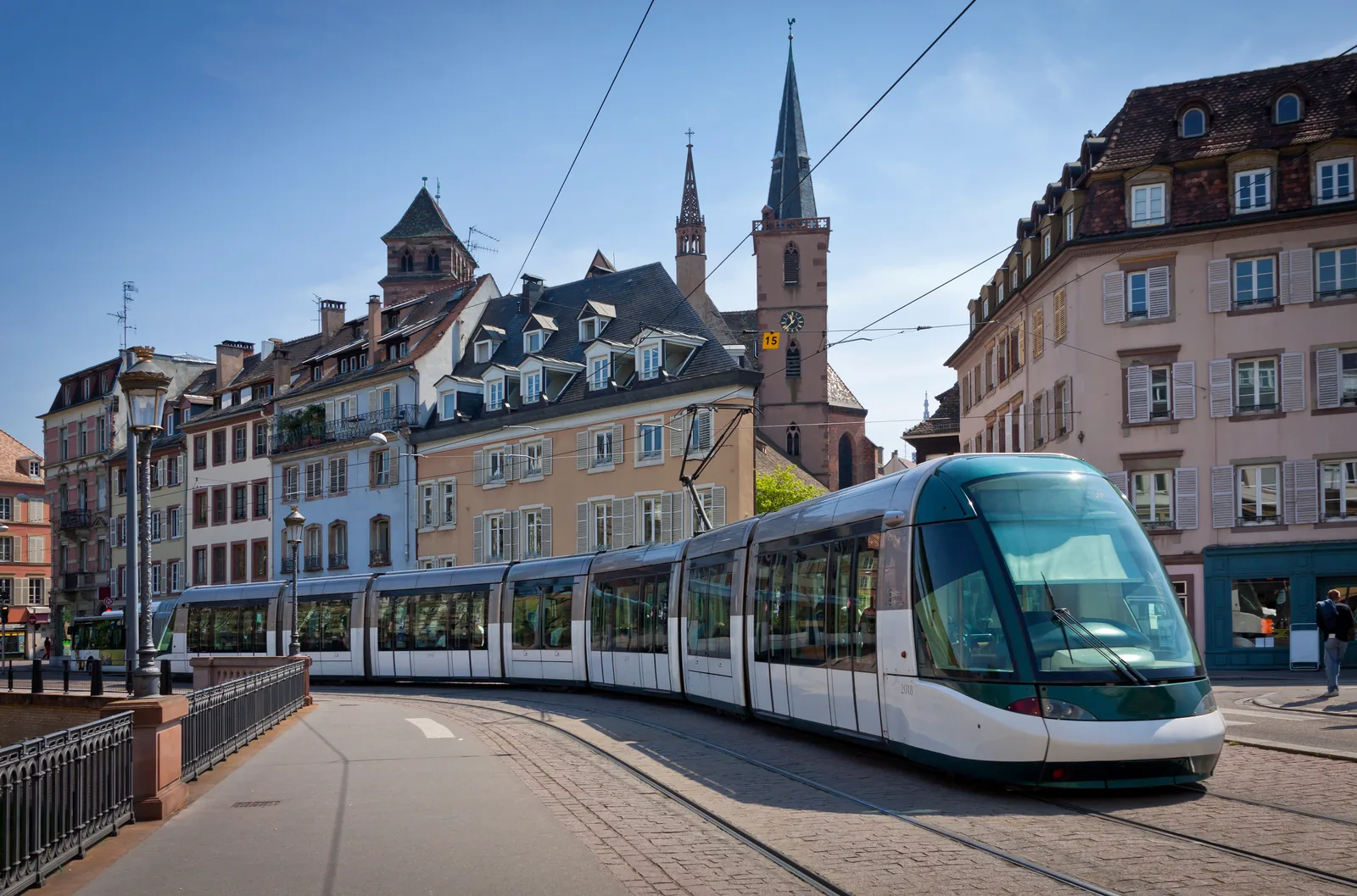



Building or renovating in the Grand Est, from Alsace to Lorraine, is a balancing act. In Strasbourg, European capital and UNESCO gem (Grande-Île, Neustadt), every project is scrutinised by the Architecte des Bâtiments de France (the State heritage architect, ABF). In Metz and Nancy, the redevelopment of industrial and military brownfield sites comes up against the protection of exceptional areas (place Stanislas, the Imperial Quarter).
Whether you are a developer building offices in the Wacken district, a manufacturer modernising a site in the Moselle or a private individual renovating a flat in the Neustadt, obtaining a building permit is an obstacle course.
A permit refusal, an objection from the ABF or an appeal by an association can paralyse your project. Laurent Bidault brings his expertise in planning law and heritage law to secure your operations in Strasbourg, Metz, Nancy and throughout the Grand Est region.
Laurent Bidault, your planning law lawyer in the Grand Est
Acting in Strasbourg or Nancy requires more than knowledge of the local plan (PLU): it calls for a command of heritage law and the ability to negotiate technical points with very vigilant ABFs. Acting in Metz or Lorraine requires expertise in the law on classified installations and the rehabilitation of complex sites.
Laurent Bidault defends your interests before the tribunal administratif de Strasbourg (Strasbourg Administrative Court) for Alsace and before the tribunal administratif de Nancy (Nancy Administrative Court) for Lorraine. His strategy: a preventive audit to defuse conflicts with the ABF, and an assertive defence in the event of litigation.
From heritage applications to industrial projects: four angles of intervention
In the Grand Est, the nature of the obstacle dictates the strategy: defending a rooftop extension in a conservation area and a logistics platform on the A31 are two different jobs.
Challenging a permit refusal or a blocking ABF opinion
This is the number one type of dispute in these cities. Has your permit been refused because the ABF issued an unfavourable opinion? Does the ABF consider your joinery, your external insulation or your rooftop extension inconsistent with the heritage character of the area?
An ABF opinion, even a binding one, may be unlawful. We audit its reasoning, look for a manifest error of assessment or an abuse of power, and then file an informal appeal or bring court proceedings to have the decision annulled.
Defending your building permit against a third-party appeal
Your permit has been granted, but a heritage protection association, very active in Alsace, or a neighbour challenges your authorisation. Your works are frozen.
- Admissibility: we check the applicant's standing to bring proceedings and compliance with the requirement to notify the appeal.
- Defence on the merits: we rebut the opposing arguments point by point and, where necessary, prepare a regularisation during the proceedings.
- Counter-attack: where an appeal is clearly dilatory, we bring a claim for damages (Article L. 600-7 of the code de l'urbanisme).
Securing the project upfront: the heritage compatibility audit
Before filing, we check the project's compatibility with the local plan and the protective easements published on the Géoportail de l'urbanisme, and then organise negotiations with the ABF and the planning department to present a project that has already been agreed and is harder to challenge.
Regularisation of works and planning offence litigation
Have works been carried out without authorisation in a building in the Neustadt or central Nancy? Has the authority drawn up an official report of an offence and threatened a demolition order? We conduct your criminal defence and, in parallel, consider the best regularisation strategy.
Operational expertise for projects in Alsace and Lorraine
Laurent Bidault tailors his work to the issues of the Lorraine corridor and the Rhine axis.
Heritage litigation (UNESCO, ABF)
This is our core expertise in the region. We defend your projects for the renovation of prestige flats (Strasbourg-Neustadt), the conversion of buildings into hotels or offices, or rooftop extensions in the remarkable heritage sites of Strasbourg, Colmar, Metz and Nancy.
Industrial projects and brownfield redevelopment (Lorraine)
Lorraine is undergoing rapid change. We assist manufacturers and developers with the rehabilitation of industrial or military brownfield sites (Metz, Thionville). These matters combine building permits, the regime for classified installations (ICPE) and the management of contaminated land.
Logistics: the Rhine axis and the A31
The Grand Est is a European crossroads. We defend building permits for logistics platforms, in particular in the Port autonome de Strasbourg area or along the A31 and A4 motorways, with the attendant issues of soil artificialisation and landscape impact.
Renewable energy and networks
We assist developers of renewable energy projects, in particular anaerobic digestion units in agricultural areas or solar farms on former brownfield sites. We also act in litigation over the roll-out of mobile phone masts.
Cross-border projects and flood risk
The proximity of Germany and Luxembourg gives rise to specific projects. We also handle litigation over flood risk prevention plans, which are ubiquitous along the Rhine, the Moselle and the Ill.
Acting in Strasbourg, Metz, Nancy and throughout the Grand Est
Laurent Bidault acts throughout Alsace (Bas-Rhin 67, Haut-Rhin 68) and Lorraine (Moselle 57, Meurthe-et-Moselle 54, Vosges 88), covering Strasbourg, Mulhouse, Colmar, Metz, Nancy and Thionville.
Frequently asked questions on
Planning law
What is the time limit for lodging an appeal on points of law against a judgment of an Administrative Court of Appeal?
The time limit for lodging an appeal on points of law (pourvoi en cassation) against a judgment of an Administrative Court of Appeal is two months from notification of the court's decision. However, this time limit is reduced to 15 days where the case concerns summary proceedings (référé).
How can a building permit be challenged?
A building permit is challenged before the administrative court, by means of an application for judicial review (recours pour excès de pouvoir), within two months from the first day of a continuous two-month period during which the notice has been properly displayed on the site. If the notice was displayed irregularly or not at all, a challenge remains possible for six months from completion of the works. Two admissibility conditions must be met: the applicant must demonstrate standing, i.e. a direct impact on the conditions of occupation, use or enjoyment of their property; and the challenge must be notified to the author of the decision and to its beneficiary within fifteen days of being filed, by registered letter with acknowledgement of receipt. An informal appeal (recours gracieux) to the mayor remains possible, within one month, but it no longer extends the time limit for bringing proceedings for decisions taken on or after 28 November 2025 (Article L. 600-12-2 of the French Planning Code, introduced by the law on simplifying planning law of 26 November 2025). You should therefore not wait for the town hall's response before applying to the court. An application for suspension (référé-suspension) may be brought alongside the action on the merits to have the works halted.
What remedies are available against a building permit or prior declaration?
Third parties with standing, such as neighbours or associations, have two months from the first day of a continuous period of proper display of the notice on the site to apply to the administrative court. Two procedural rules determine admissibility: the challenge must be notified to the author of the decision and to its beneficiary within fifteen days of being filed, and standing must be established in detail. A decisive strategic point: since the law on simplifying planning law of 26 November 2025, an informal appeal (recours gracieux) no longer extends the time limit for bringing proceedings before the court for decisions taken on or after 28 November 2025. Waiting for the town hall's response therefore exposes you to the risk of being time-barred. Alongside the action on the merits, an application for suspension (référé-suspension) can be made to have the works halted.
What remedies are available against a refusal of a building permit?
Any refusal must state its legal and factual grounds. The first step is to analyse those grounds to determine whether they can be challenged in law or whether they reveal an obstacle that could be removed by amending the project. An application for judicial review (recours pour excès de pouvoir) must be lodged with the administrative court within two months of notification of the refusal. If the refusal is annulled, the court may order the administration to re-examine the application and, where the project complies with planning rules, to grant the authorisation. A point to watch: since the law on simplifying planning law of 26 November 2025, an informal appeal (recours gracieux), which must now be lodged within one month, no longer extends the time limit for bringing proceedings before the court. For decisions taken on or after 28 November 2025, you must apply directly to the court, or lodge both appeals at the same time.
What is the time limit for appealing a decision of an administrative court?
The time limit for appealing a decision of an administrative court (tribunal administratif) is two months from notification of the judgment. This time limit is only 15 days if the decision is an interim relief order (référé).
What is the right of retrocession?
If the local authority wishes to change the purpose or use of the property within 5 years of its acquisition, it must inform the former owner and offer them priority to acquire it. If the former owner declines, the local authority must inform the ousted prospective buyer named in the declaration of intention to sell (déclaration d'intention d'aliéner), and offer them priority to acquire the property.
What is the right to compel purchase (droit de délaissement)?
The right to compel purchase (droit de délaissement) is the right given to the owner of a property subject to a public utility easement (a reserved site in the local urban plan or PLU, an expropriation zone) to require the public authority to purchase the property. This right enables the owner to escape a deadlock caused by the public constraint weighing on their property. The authority then has one year in which to decide on the acquisition.
What is a carte communale?
The carte communale (municipal land-use map) is the equivalent of the PLU (local urban plan) for small municipalities that have chosen not to adopt one. It defines the areas where building is permitted, as well as the public utility easements affecting land use.
What is the commercial pre-emption right?
The commercial pre-emption right is a tool available to municipalities to combat the decline of town centres and ensure that local shops are maintained. The purpose of this pre-emption right is therefore to maintain or reintroduce diversity in local economic activity.
What is a prior declaration of works?
The prior declaration of works (déclaration préalable de travaux) is a planning authorisation that must be obtained before smaller-scale works begin. It is less demanding than a building permit and covers less significant construction and works. This declaration is mandatory and largely shares the procedural requirements of the building permit.
What is a building permit?
A building permit is a planning authorisation that must, in most cases, be obtained before works begin, whether to build, demolish or alter a structure, regardless of the type of owner or structure. It generally concerns new constructions and major alterations to existing buildings.
What is a SCOT?
The SCOT (Schéma de cohérence territoriale, territorial coherence scheme) is a long-term strategic inter-municipal planning document covering an urban area or a large living or employment area. It incorporates all higher-level planning documents; PLUs, PLUis and cartes communales therefore refer directly to the SCOT.
Can the municipality exercise its right of pre-emption?
Yes. If your property is located in a pre-emption zone (DPU), the municipality can take the place of the buyer when the Declaration of Intention to Sell (Déclaration d'Intention d'Aliéner, DIA) is signed. However, this decision must be strictly justified by a genuine development project in the general interest. We can assist you in challenging the lawfulness of the pre-emption or in negotiating the sale price before the expropriation judge.
Is a building permit required for a relay antenna?
A relay antenna requires a prior declaration where its footprint and floor area exceed 5 m² but do not exceed 20 m². A building permit is required if the antenna's footprint or floor area exceeds 20 m², or if the antenna is located within the boundaries of remarkable heritage sites (sites patrimoniaux remarquables) or in the vicinity of historic monuments and listed sites.
How can you ensure that a project complies with the PLU?
Before submitting an application, our firm carries out a thorough audit of your project against the rules of the Local Urban Plan (PLU) (zoning, height, footprint, parking). We can also apply for a planning certificate (certificat d'urbanisme, either detailed or informational) to freeze the rules applicable to your land.
What are the requirements for displaying a building permit?
Display on the site is mandatory whatever the operation, and whether the permit was granted expressly or tacitly. It takes the form of a rectangular sign visible from the public road, the content of which is set by the French Planning Code: identity of the beneficiary, date and number of the permit, nature of the project, area of the land, authorised floor area, height of the building, address of the town hall where the file can be consulted, and details of the means and time limits for challenging it. What is at stake is triggering the time limit for third-party challenges, which runs from the first day of a continuous two-month display period. Incomplete or interrupted display does not start that time limit running and leaves the project exposed to a late challenge: it is strongly advisable to have a commissaire de justice (judicial officer) draw up official reports at the beginning, during and at the end of the period.
What is the time limit for challenging a building permit?
Third parties have two months from the first day of a continuous two-month period of proper display of the sign on the site. Where the display was irregular or did not take place, this time limit does not run: a challenge remains possible for six months from completion of the works. Two points are decisive in practice. The challenge must be notified to the author of the decision and to its beneficiary within fifteen days of being lodged, failing which it will be inadmissible. And, for decisions taken on or after 28 November 2025, a request for reconsideration (recours gracieux) no longer extends the time limit for bringing court proceedings: you must therefore not wait for the town hall's response before applying to the administrative court.
What is the right of pre-emption?
The right of pre-emption is the power given to a local authority (or to a dedicated body) to acquire, as a priority and within certain previously defined areas, property being disposed of, with a view to carrying out operations in the public interest.
Is it compulsory to use an architect for a building permit?
Using an architect is the rule for any building permit application. The only notable exemption applies to individuals who build, or have built, for themselves a building whose floor area does not exceed 150 m², a threshold raised to 800 m² for agricultural buildings. A point often overlooked: this exemption does not apply to legal entities. A property holding company (SCI), including a family one, a property development company or a local authority must use an architect whatever the size of the project, failing which the application will be inadmissible.
Do you need a building permit for a conservatory (véranda)?
It depends on the area created and the location of the land. A conservatory is an extension: in an urban zone of a municipality covered by a PLU (local urban development plan), a prior declaration is sufficient up to 40 m² of floor area or footprint, and a building permit becomes mandatory above that. Everywhere else, the threshold is lowered to 20 m². Please note: in an urban zone, a building permit is again required from 20 m² where the extension brings the total floor area of the building above 150 m².
Do you need a building permit for a garage?
It depends on the size of the garage and its location. If it is attached to the existing building, it is an extension: prior declaration up to 40 m² in an urban zone of a municipality covered by a PLU, up to 20 m² elsewhere, and a building permit above that. If it is a detached garage, it is a new construction: no formalities up to 5 m², prior declaration from 5 to 20 m², building permit above 20 m². In an urban zone, a building permit is also required from 20 m² if the works bring the total floor area above 150 m².
Do you need a building permit to convert an attic?
Converting an attic is only subject to authorisation if it creates floor area or alters the external appearance of the building, for example by adding a roof window or a dormer. Where this is the case, a prior declaration is sufficient up to 40 m² of floor area created in an urban zone of a municipality covered by a PLU, and up to 20 m² elsewhere; above that, a building permit is required. In an urban zone, a building permit is also required from 20 m² if the works bring the total floor area of the building above 150 m².
How much does a building permit cost?
Filing the application is free: the town hall does not charge any processing fee. The real cost of a building permit lies in three items. First, planning taxes, chief among them the development tax (taxe d'aménagement), assessed on the taxable area using a flat-rate value per square metre revised each year, to which the rates voted by the municipality and the département apply; in Île-de-France, an office, retail or warehouse project is also subject to the charge for the creation of premises (redevance pour création de locaux). Second, design and project management fees, which vary according to the nature and complexity of the project. Finally, where applicable, the preventive archaeology levy. These items must be costed from the outset in the development appraisal: the development tax often represents an amount out of all proportion to the application costs.
What is the PLU?
The local urban development plan (Plan local d'urbanisme, PLU) sets the planning and building rules by dividing the territory into plots and zones with distinct legal regimes. For each plot, it shows the applicable planning rules as well as easements, access to utility networks and to the public road, and whether or not the plot can be built on.
Do you need a building permit for a swimming pool?
No, in most cases. A pool with a surface area of 10 m² or less is exempt from any formalities, except in a protected area. Between 10 m² and 100 m², a prior declaration is sufficient. A building permit is only required for a pool of more than 100 m². It is also required, whatever the surface area of the pool, where the pool is covered by a shelter more than 1.80 metres high. These thresholds do not exempt the project from complying with the PLU, which may lay down its own rules on siting, setbacks and footprint.
How can the designated use (destination) of a property be changed?
A change of designated use requires, at a minimum, a prior declaration. If the accompanying works alter the load-bearing structures or the façade of the building, a building permit is required. Two useful points. The French Planning Code distinguishes five uses and twenty sub-uses: moving from one sub-use to another within the same use is not, in itself, a change of use requiring authorisation, although the PLU may regulate it. In addition, certain changes of use are subject to a binding opinion, in particular that of the CDPENAF (commission for the preservation of natural, agricultural and forest areas) for a building located in an agricultural zone.
How can a pre-emption decision be challenged?
The owner and the ousted buyer may attempt to challenge the pre-emption decision. Before bringing litigation, it is possible to lodge a prior informal appeal (recours gracieux) with the holder of the pre-emption right within 2 months of notification of the decision. If the informal appeal is rejected by the holder, a contentious appeal must then be lodged with the administrative court within 2 months.
A refusal must be challenged within two months
After that period, the decision becomes final. And since 28 November 2025, an informal appeal (recours gracieux) no longer extends the deadline for bringing court proceedings: it is no longer a second chance. In Strasbourg, Metz or Nancy, have the decision analysed as soon as it is notified.