Lawyer specialising in the sale of bakeries and patisseries
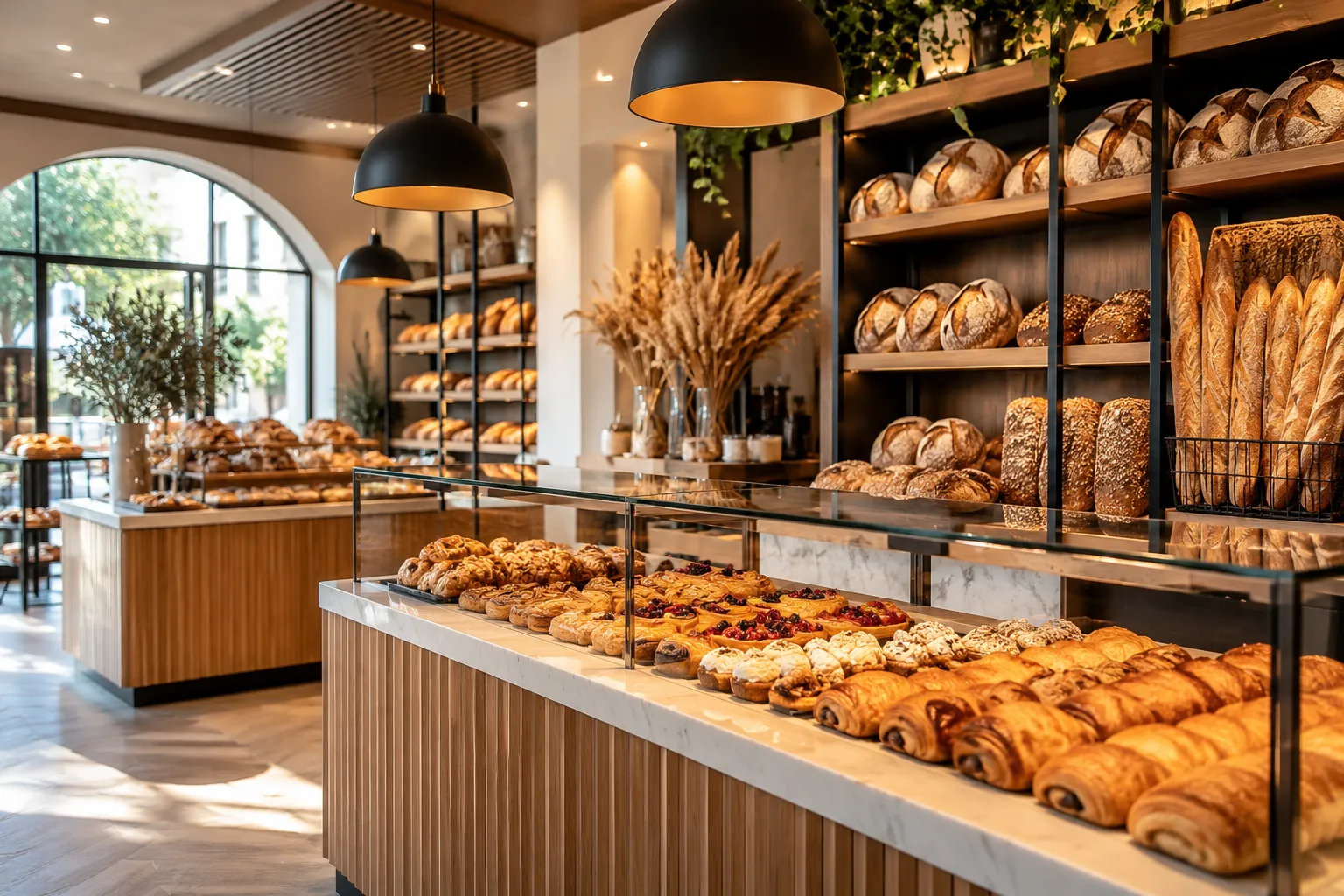

Lawyer specialising in the sale of bakery and patisserie businesses
Are you looking to sell your bakery, hand over your business or acquire a bakery-patisserie business (fonds de commerce)? Secure the sale or purchase of your bakery-patisserie with Baptiste Robelin of Novlaw Avocats.
The sale of a bakery is a strategic transaction that requires a thorough command of the legal, financial, regulatory and commercial aspects specific to this sector.
Baptiste Robelin advises bakers, pastry chefs, buyers, investors and entrepreneurs throughout France on securing their business transfer projects.
His role is simple: to enable you to sell or acquire your bakery on the best legal and economic terms.
Why use a lawyer for the sale of a bakery?
A bakery is not a business like any other.
The activity has many particular features that call for specific support.
State qualifications required to work as a baker-pastry chef
Baking is a regulated activity. Under Article L121-1 of the Code de l’artisanat (Crafts Code), specific state qualifications are required to practise as a baker.
The distinction between a bakery and a bake-off outlet
The use of the name “bakery” is itself regulated. Law No. 98-405 of 25 May 1998 reserves the title of artisan-boulanger (craft baker) exclusively, and permits the sign “boulangerie” only for bakers who make their own bread.
If that is not the case, the business is not a bakery but a bake-off outlet (terminal de cuisson). It is then not a craft activity but a commercial one, which also affects the operator’s registration (the Trades Register or the Trade and Companies Register, as the case may be).
Registration of the baker
If the baker simply makes and sells bread with no other ancillary activity, the business is a craft activity and must be registered with the Trades Register (répertoire des métiers); if, on the other hand, the baker decides to sell other goods alongside, such as flour or sugar, the activity will be regarded as commercial and must be registered with the Trade and Companies Register (RCS).
It is therefore essential for anyone wishing to acquire a business in this sector to draw a clear distinction between a bake-off outlet and a bakery.
Novlaw supports you at every stage of the sale of your bakery-patisserie business
Full legal audit of the bakery-patisserie
Before anything is signed, Baptiste Robelin carries out an in-depth audit of the situation.
This review covers in particular:
- the commercial lease;
- supplier contracts;
- any franchise agreements;
- administrative authorisations;
- regulatory obligations;
- employment contracts;
- any pending disputes.
The aim is to identify the risks and secure the transaction.
Taking account of the specific features of selling a bakery business
It should be remembered that in the sale of a business, the sale includes tangible assets such as equipment (e.g. the oven, the kneading machine), as well as intangible assets (the right to the commercial lease, the trade name and the goodwill).
Unlike a stand-alone assignment of the lease, the landlord cannot prohibit the sale of the business, in accordance with Article L145-16 of the Code de commerce (Commercial Code).
The landlord may, however, regulate it and make it subject to approval (based on objective solvency criteria, for example). To carry out the sale of the bakery, the parties will need to choose the most appropriate legal structure. They may choose to proceed with:
- either a sale of the bakery business (fonds de commerce);
- or a sale of the shares in the company operating the bakery.
The chosen structure will also affect how the price is determined. In particular, an analysis of the business’s EBITDA (EBE, gross operating surplus) and an accounting and financial review of the company accounts and margins will be needed to value the shares of the company if the sale takes that form.
Generally, the choice between a sale of the business and a sale of shares will be driven by tax considerations. Only a case-by-case analysis, taking account of the parties’ situation, can determine the most appropriate form.
The choice of the most suitable company form for operating the bakery (SARL, SAS, etc.) will also depend on the parties’ situation and on the social security status intended for the manager and, where applicable, his or her spouse.
Managing the transfer of contracts on the sale of a bakery business
When it comes to taking over contracts as part of the sale of a bakery business, suppliers naturally come to mind: the seller may have built close commercial relationships with them that prove more advantageous than new ones. This is a point the buyer will need to pay particular attention to during the sale.
FOCUS: Franchising: if the selling baker belonged to a franchise network, the buyer will necessarily have to obtain the authorisation of the network’s head in order to take over the business and use the brand in turn.
Support in valuing a bakery-patisserie business
Valuing a bakery-patisserie business to determine its sale price requires knowledge of the specific features of the sector. Baptiste Robelin has solid experience in this field.
The sale price is generally based on a scale applied to turnover, often in a range of 80% to 130%.
It is also possible to value the bakery business on the basis of its economic performance and operating result (EBITDA), in particular after deducting the manager’s remuneration.
Criteria affecting the value of the business
Purely accounting methods (whether a valuation based on EBITDA or on turnover) must always be weighted according to the specific features of the business. In general, the sale price of a bakery-patisserie will vary in particular according to:
- whether or not staff accommodation is included in the bakery’s commercial lease;
- the shop’s closing and opening days;
- the specific features of the bakery’s commercial lease (rent, service charges, obligations of the parties, etc.);
- the equipment included in the business and the condition of the equipment (kneading machine, dough divider, proving room, bread oven, cold room, etc.);
- the location, the neighbourhood and the type of customers;
- the state of local competition;
- any other subjective criterion that may matter to the parties;
All of this, of course, taking into account the state of the property market and the interest rates applicable at the time of the sale.
How the baker adapts to the local environment
A bakery is essentially a local business. To assess a business’s potential, you need to look at its immediate surroundings, the type of customers and the products it can offer: snacks, sandwiches, traditional breads, baguettes, viennoiserie (croissants, pains au chocolat), patisserie, etc. All of these factors will also influence the price if the business is resold.
Whether or not the bakery succeeds will depend above all on the baker’s ability to adapt to the local environment and to set prices according to the local customer base (that is, within a radius of around 300 metres).
Before buying the business, a prospective buyer should therefore take into account:
- footfall;
- the catchment area;
- consumer habits;
- the growth of the snacking market;
- competition;
- and growth prospects.
These factors are essential in assessing the value of the business and its potential after the takeover.
Selling the business or selling the shares of the bakery: which option should you choose?
Two methods of transfer can be considered when buying or selling a bakery-patisserie: the sale of the business itself, or the sale of the shares of the operating company. These legal structures are mutually exclusive and each has its advantages and drawbacks.
Sale of the bakery business
This transaction covers in particular:
- the goodwill;
- the right to the lease;
- the trade name;
- the equipment;
- the professional fittings.
In this case, the buyer does not take on the seller’s debts, but must carefully check the nature of the assets and plan to set up its own company before the acquisition. The seller, for its part, will not receive the sale price immediately: it will be held in escrow by the lawyer drafting the deed for several weeks, while any creditors’ objections are cleared.
Sale of the shares of the baker’s company
This option consists in selling the shares of the operating company.
It requires a more in-depth audit covering in particular:
- the company accounts;
- debts;
- financial commitments;
- contracts;
- tax and employment risks.
In this case, the buyer will be liable for the seller’s debts. It will therefore be essential to provide for a liability warranty to protect the buyer, in particular where certain debts were not disclosed before the sale.
Why choose Baptiste Robelin?
By instructing Novlaw, you benefit from:
✓ personalised support;
✓ expertise in the sale of businesses;
✓ a single point of contact;
✓ a fully secured transaction;
✓ support during negotiations;
✓ a pragmatic, results-driven approach.
Baptiste Robelin assists you in drafting your sale project. He helps you complete the sale of your bakery business with complete peace of mind, and helps you determine the most suitable company form for operating your bakery.
Frequently asked questions on
Sale of a business (fonds de commerce)
What should be done if creditors lodge an objection against the sale price of a business?
If the seller's creditors lodge an objection against the sale price of the business (fonds de commerce), the price remains blocked in the hands of the escrow agent (lawyer or notary) until the objections are lifted. If there is a dispute as to whether an objection is well founded, court proceedings may be necessary to have it lifted. The buyer, for their part, cannot be pursued if the statutory publication formalities have been properly completed.
What is the commercial pre-emption right?
The commercial pre-emption right is a tool available to municipalities to combat the decline of town centres and ensure that local shops are maintained. The purpose of this pre-emption right is therefore to maintain or reintroduce diversity in local economic activity.
Can immediate payment of the sale price be requested after the sale of a business?
No. In the sale of a business (fonds de commerce), the seller does not immediately receive the full sale price. The seller must wait until the statutory period for creditors' objections has expired (10 days from the last legal publication). During this period, the price is held in escrow by the lawyer or notary. Only at the end of this period, and if no valid objection has been lodged, can the price be released to the seller.
What are the seller's obligations on the sale of a business (fonds de commerce)?
The seller (transferor) of a business is subject to several obligations: a duty to inform employees in advance where the company has fewer than 50 employees (at least one month before the sale for sales concluded after 27 July 2026), while companies with at least 50 employees that have a social and economic committee (CSE) must inform and consult it; a warranty obligation (warranty against eviction and warranty against latent defects); disclosure of turnover and results for the last three financial years and making the accounting records available (Art. L. 141-2 of the Commercial Code); and the obligation not to set up again within an area in competition with the transferee if a non-reinstatement clause has been agreed.
Can I get prompt assistance with the sale of a business?
Yes. The sale of a business can often require prompt action, in particular where an offer has already been signed or where a sale timetable has been imposed by the parties or the financing bank. Novlaw regularly assists sellers and buyers under tight deadlines and can act at every stage of the transaction, anywhere in France, thanks to the electronic signature of deeds. An initial meeting generally makes it possible to identify the key issues quickly and set a timetable suited to the transaction.
How much does a lawyer charge for the sale of a business?
A lawyer's fees for the sale of a business vary according to the complexity of the case, the value of the transaction and the scope of the assignment. Some lawyers offer a fixed fee covering the entire transaction (audit, negotiation, preliminary sale agreement, final deed and formalities), while others charge on a time-spent basis. A prior quote makes it possible to know the exact cost of the assistance before work on the case begins.
How much are the registration duties on the sale of a business?
Registration duties are payable by the transferee and depend on the sale price: up to €23,000, the transferee is exempt; between €23,000 and €200,000, the duties amount to 3% of the price; above €200,000, they amount to 5%. The transferee must pay these duties within one month of the date of sale or of taking possession of the business, if earlier.
How do you value a business (fonds de commerce)?
The parties may use several valuation methods: the so-called scale method, valuation based on the business's profitability, the comparison method, or the adjusted net asset method. This stage may be subject to negotiation, and it is useful to be assisted by a professional who is familiar with these different methods.
Who pays the lawyers' fees on the sale of a business?
No legal provision imposes any particular allocation of lawyers' fees. In practice, each party generally pays its own adviser's fees. However, the parties frequently agree on a different allocation during negotiations. This issue is often raised in the very first discussions and may be included in the letter of intent or the preliminary sale agreement.
How much does the sale of a business cost?
The cost of selling a business depends on many factors: the value of the business, the complexity of the transaction, whether there is a commercial lease, bank financing, vendor credit, preliminary audits and negotiations between the parties. In addition to the sale price, lawyers' fees, any intermediary fees (specialist agency), registration duties and the costs of administrative formalities should be anticipated. Legal support makes it possible to anticipate these costs and secure the transaction.
What are the stages in the sale of a business?
The sale of a business takes place in several successive stages: valuation of the business, drafting of the deeds (promise or preliminary agreement for sale, followed by the final deed), the formalities following the promise (clearing the municipality's pre-emption right, notifying the landlord if necessary, registering the promise in the case of a unilateral promise), the post-sale formalities, which differ depending on whether one is the transferor or the transferee, publication in a legal announcements journal and in the BODACC at the buyer's initiative, and finally the period of joint tax liability, with the sale price held in escrow.
Let's talk about your project or your situation
Every situation deserves a clear and pragmatic analysis. Novlaw helps you secure your decisions, anticipate risks and defend your interests.