Lawyer for the sale of tobacconist businesses
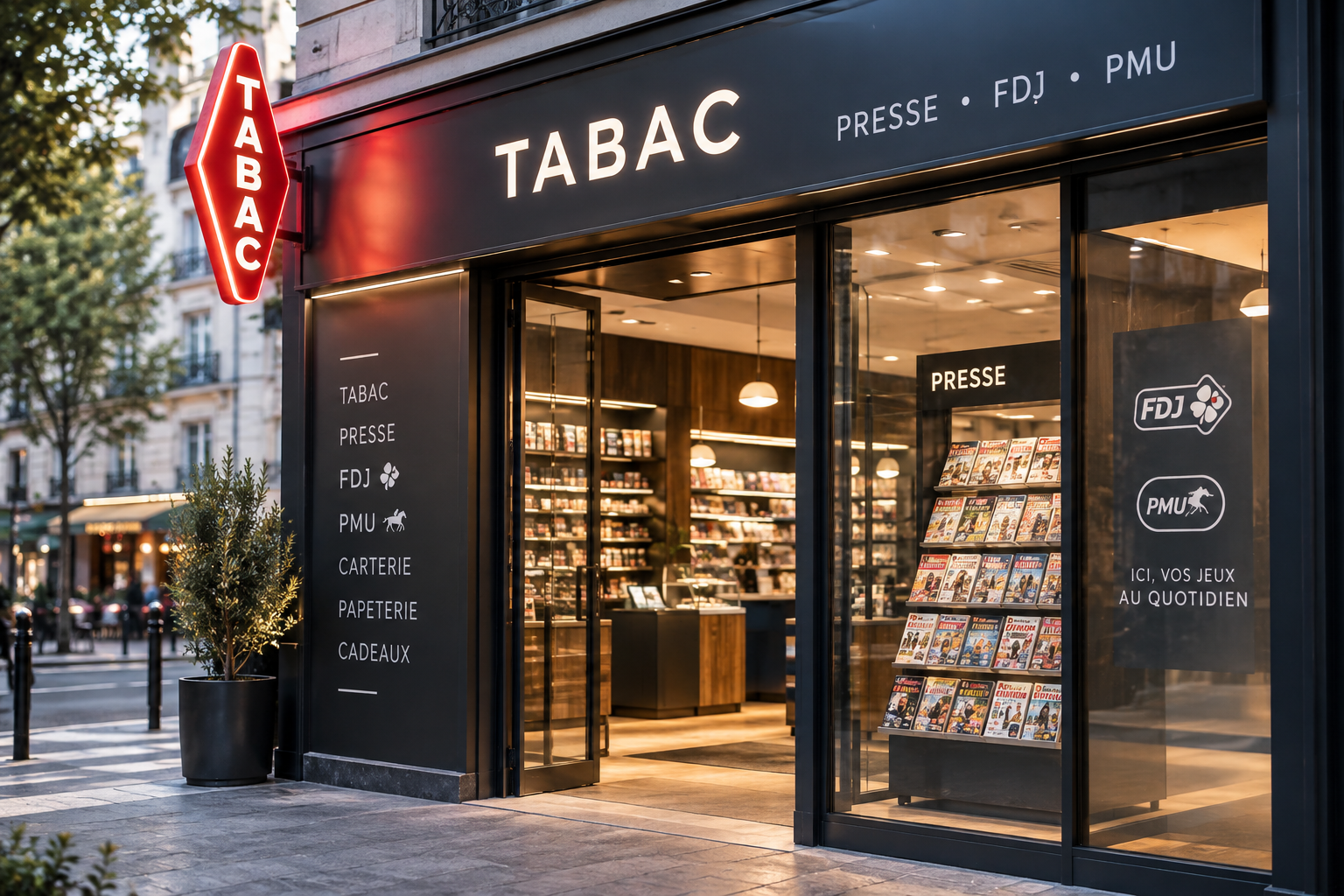

The sale of a tobacconist (bureau de tabac) is a particular transaction that combines the sale of a business with an administrative procedure before the customs authorities. Novlaw Avocats advises sellers and buyers on the preparation, negotiation and completion of these transactions.
A sale of a business subject to specific rules
The sale of a business to which a tobacco retail outlet (débit de tabac) is attached cannot be treated as a standard sale of a business.
Tobacco retailing falls within the state monopoly on the retail sale of manufactured tobacco. The tobacconist carries on this activity as an agent of the authorities, under a management contract (contrat de gérance) concluded with the customs authorities.
As a result, the right to operate the tobacco outlet cannot be freely transferred with the business.
The sale covers the business and its transferable assets: goodwill, the leasehold right where applicable, equipment, furniture and related commercial activities such as newspapers, stationery and gifts and novelties.
Where the seller also owns the premises, their sale is a separate property transaction which may, where appropriate, be arranged in parallel with the sale of the business.
The buyer, for its part, must meet the conditions required by the authorities and be approved in order to operate the tobacco outlet.
This interplay between the commercial sale and the administrative procedure is one of the main specificities of the transaction.
Presenting the successor to the customs authorities
Provided that the conditions laid down by the regulations are met, a tobacconist wishing to sell the business may present the buyer to the authorities as successor to the management of the tobacco outlet.
This procedure is governed by decree no. 2010-720 of 28 June 2010 on the exercise of the monopoly on the retail sale of manufactured tobacco.
The seller must in particular show that it has managed the outlet for the required period, that it has complied with its obligations under the management contract and that it is in a position to settle its tax and social security debts.
The regulations provide for certain special situations and exemptions, in particular in the event of an involuntary interruption of the activity, medically recognised incapacity or the death of the tobacconist.
Above all, the successor is presented before the sale of the business is completed.
The timetable for the sale must therefore be built around the procedure before the competent interregional directorate of customs and excise (direction interrégionale des douanes et droits indirects).
Poor coordination between the preliminary sale agreement, the administrative procedure, the financing and the final signing can delay the transaction or even jeopardise its completion.
What conditions must the buyer of a tobacconist meet?
Acquiring the business is not, in itself, enough to allow the buyer to operate the tobacco outlet.
The applicant must meet the conditions laid down by the regulations and put together the file required by the customs authorities.
Depending on the situation, the authorities check in particular:
- the personal conditions required to carry on the activity;
- the ownership and operating conditions of the business to which the outlet is attached;
- the applicant's financial capacity and the financing of the acquisition;
- compliance with the conditions of good character and enjoyment of civic rights;
- completion of the professional training obligations applicable to the manager and, where applicable, to the other persons involved in running the business.
Specific rules apply in particular where the outlet is operated through a general partnership (société en nom collectif) and, in certain rural municipalities, for certain ways of operating the business.
The buyer's file must therefore be anticipated from the earliest stages of the transaction.
The tobacco outlet management contract is not transferred with the business
One of the main differences from an ordinary sale of a business lies in what happens to the management contract concluded with the authorities.
The buyer does not automatically take over the seller's contract.
If it meets the required conditions and its application is accepted, it concludes its own management contract with the customs authorities before being able to operate the outlet and obtain supplies of manufactured tobacco.
The sale must therefore be structured so that the buyer does not end up owning a business whose main activity it cannot operate under the economic conditions envisaged.
This issue calls in particular for tailored conditions precedent in the preliminary sale agreement.
How can the preliminary agreement for the sale of a tobacconist be secured?
The preliminary sale agreement is a decisive stage.
It sets the price and the scope of the business sold, and also organises the various conditions needed for the final completion of the transaction.
Depending on the case, completion of the sale may in particular be made conditional on:
- the buyer being accepted by the customs authorities;
- bank financing being obtained;
- the commercial lease being checked or renewed;
- the landlord's consent, where required;
- the treatment of the contracts relating to gaming activities;
- completion of the necessary formalities where a drinks licence is operated on the premises.
Particular attention should also be paid to the time limits set by these conditions and how they interact.
The aim is to prevent a party from being definitively bound while an authorisation essential to operating the business has not yet been obtained.
What happens to FDJ and PMU activities on the sale?
Many tobacconists also operate gaming or betting activities.
The contractual relationships with La Française des Jeux (FDJ) and the PMU must be distinguished from the assets of the business that can be freely transferred to the buyer.
The buyer should therefore not assume that acquiring the business automatically secures the approvals or contractual relationships enjoyed by the seller.
This point must be addressed from the outset of the negotiations.
In particular, it is necessary to distinguish:
- the legal transferability of the contracts or approvals concerned;
- the steps the buyer must take with the operators;
- the economic impact of gaming and betting activities on turnover, footfall and the value of the business.
The deed of sale should describe the situation precisely to avoid any disagreement arising after the sale over the scope of what has actually been sold.
What happens to the drinks licence?
Some tobacconists also operate as a drinks outlet.
Where a licence is attached to the business, what happens to it must be examined separately and the applicable formalities anticipated.
Depending on the licence and the activity concerned, the buyer may in particular be required to hold an operating permit (permis d'exploitation) and to make the required administrative declarations within the time limits laid down by the Code de la santé publique (French Public Health Code).
The existence of a licence should therefore be identified during the due diligence on the business so that the corresponding steps can be built into the timetable for the sale.
Due diligence on the business before the sale
Beyond the rules specific to tobacco, the transaction remains a sale of a business.
Before committing, it is necessary in particular to examine:
- the commercial lease and the permitted use of the premises;
- the amount of rent, service charges and any works;
- the clauses governing the assignment of the lease;
- the turnover and results of the business;
- the breakdown of turnover between tobacco and complementary activities;
- the contracts needed to run the business;
- any employees taken over with the business;
- the equipment and fittings included in the sale;
- security interests, registrations and any objections that may affect the business.
For the buyer, this due diligence makes it possible to check that the legal conditions of operation match the business model on which the acquisition is based.
For the seller, it makes it possible to identify early enough any difficulties that may delay the transaction.
How Novlaw Avocats assists with the sale of a tobacconist
Novlaw Avocats advises sellers and buyers of tobacconists at every stage of their transaction, as it does for other regulated businesses such as laundrettes and dry cleaners and pharmacies.
Our assistance may cover in particular:
- a preliminary analysis of the legal feasibility of the sale;
- due diligence on the business and the commercial lease;
- preparing the transaction timetable, taking account of the customs procedure;
- drafting and negotiating the preliminary sale agreement;
- drafting the conditions precedent relating to administrative approval, financing and other necessary authorisations;
- precisely defining the assets included in the sale;
- the contractual treatment of FDJ and PMU activities and any licences;
- drafting the final deed of sale;
- organising the escrow of the sale price;
- completing the formalities relating to the sale of the business.
Early involvement makes it possible in particular to coordinate the various parties to the transaction — seller, buyer, bank, landlord, chartered accountant and authorities — and to avoid a regulatory difficulty being discovered a few days before signing.
Frequently asked questions
Can a tobacco outlet be sold on its own?
No. The right to operate a tobacco outlet is not a freely transferable licence.
The sale covers the business to which the outlet is attached. The buyer must meet the conditions imposed by the customs authorities and be authorised to operate the outlet.
How long must the outlet have been operated before a successor can be presented?
The general rule laid down by the regulations is a minimum of three years of management.
However, exceptions and special regimes exist in certain situations. Whether a successor can be presented must therefore be checked in the light of the tobacconist's personal situation and the history of the outlet.
Can the buyer sign the sale before being accepted by customs?
The sequence of steps must be organised with care.
A preliminary sale agreement can allow the parties to set the terms of their transaction while making its final completion conditional on the authorisations and conditions needed to operate the outlet.
The drafting of the conditions precedent and their time limits is therefore particularly important.
Is the FDJ contract automatically transferred to the buyer?
No. The acquisition of the business should not be presented as automatically transferring the approval or contract enjoyed by the seller.
The buyer must anticipate the necessary steps with the operator concerned. The economic impact of the FDJ activity may nevertheless be taken into account in analysing and valuing the business.
What happens if the buyer is not accepted to operate the tobacco outlet?
The buyer will not be able to operate the tobacco retail activity under the conditions envisaged.
It is precisely to prevent a sale from becoming final in such a situation that the contractual documentation must provide for the consequences of a refusal by the authorities, in particular through tailored conditions precedent.
Do you need a lawyer to sell a tobacconist?
A lawyer's involvement is not limited to drafting the deed of sale.
In a transaction involving a tobacconist, it is necessary to coordinate the law on the sale of a business, the commercial lease, the financing, the contracts relating to complementary activities and the administrative procedure applicable to the tobacco outlet.
Novlaw Avocats advises both sellers and buyers in order to secure each of these stages, from the initial negotiations through to completion of the sale.
Frequently asked questions on
Sale of a business (fonds de commerce)
What should be done if creditors lodge an objection against the sale price of a business?
If the seller's creditors lodge an objection against the sale price of the business (fonds de commerce), the price remains blocked in the hands of the escrow agent (lawyer or notary) until the objections are lifted. If there is a dispute as to whether an objection is well founded, court proceedings may be necessary to have it lifted. The buyer, for their part, cannot be pursued if the statutory publication formalities have been properly completed.
What is the commercial pre-emption right?
The commercial pre-emption right is a tool available to municipalities to combat the decline of town centres and ensure that local shops are maintained. The purpose of this pre-emption right is therefore to maintain or reintroduce diversity in local economic activity.
Can immediate payment of the sale price be requested after the sale of a business?
No. In the sale of a business (fonds de commerce), the seller does not immediately receive the full sale price. The seller must wait until the statutory period for creditors' objections has expired (10 days from the last legal publication). During this period, the price is held in escrow by the lawyer or notary. Only at the end of this period, and if no valid objection has been lodged, can the price be released to the seller.
What are the seller's obligations on the sale of a business (fonds de commerce)?
The seller (transferor) of a business is subject to several obligations: a duty to inform employees in advance where the company has fewer than 50 employees (at least one month before the sale for sales concluded after 27 July 2026), while companies with at least 50 employees that have a social and economic committee (CSE) must inform and consult it; a warranty obligation (warranty against eviction and warranty against latent defects); disclosure of turnover and results for the last three financial years and making the accounting records available (Art. L. 141-2 of the Commercial Code); and the obligation not to set up again within an area in competition with the transferee if a non-reinstatement clause has been agreed.
Can I get prompt assistance with the sale of a business?
Yes. The sale of a business can often require prompt action, in particular where an offer has already been signed or where a sale timetable has been imposed by the parties or the financing bank. Novlaw regularly assists sellers and buyers under tight deadlines and can act at every stage of the transaction, anywhere in France, thanks to the electronic signature of deeds. An initial meeting generally makes it possible to identify the key issues quickly and set a timetable suited to the transaction.
How much does a lawyer charge for the sale of a business?
A lawyer's fees for the sale of a business vary according to the complexity of the case, the value of the transaction and the scope of the assignment. Some lawyers offer a fixed fee covering the entire transaction (audit, negotiation, preliminary sale agreement, final deed and formalities), while others charge on a time-spent basis. A prior quote makes it possible to know the exact cost of the assistance before work on the case begins.
How much are the registration duties on the sale of a business?
Registration duties are payable by the transferee and depend on the sale price: up to €23,000, the transferee is exempt; between €23,000 and €200,000, the duties amount to 3% of the price; above €200,000, they amount to 5%. The transferee must pay these duties within one month of the date of sale or of taking possession of the business, if earlier.
How do you value a business (fonds de commerce)?
The parties may use several valuation methods: the so-called scale method, valuation based on the business's profitability, the comparison method, or the adjusted net asset method. This stage may be subject to negotiation, and it is useful to be assisted by a professional who is familiar with these different methods.
Who pays the lawyers' fees on the sale of a business?
No legal provision imposes any particular allocation of lawyers' fees. In practice, each party generally pays its own adviser's fees. However, the parties frequently agree on a different allocation during negotiations. This issue is often raised in the very first discussions and may be included in the letter of intent or the preliminary sale agreement.
How much does the sale of a business cost?
The cost of selling a business depends on many factors: the value of the business, the complexity of the transaction, whether there is a commercial lease, bank financing, vendor credit, preliminary audits and negotiations between the parties. In addition to the sale price, lawyers' fees, any intermediary fees (specialist agency), registration duties and the costs of administrative formalities should be anticipated. Legal support makes it possible to anticipate these costs and secure the transaction.
What are the stages in the sale of a business?
The sale of a business takes place in several successive stages: valuation of the business, drafting of the deeds (promise or preliminary agreement for sale, followed by the final deed), the formalities following the promise (clearing the municipality's pre-emption right, notifying the landlord if necessary, registering the promise in the case of a unilateral promise), the post-sale formalities, which differ depending on whether one is the transferor or the transferee, publication in a legal announcements journal and in the BODACC at the buyer's initiative, and finally the period of joint tax liability, with the sale price held in escrow.
Planning to sell or buy a tobacconist?
Are you considering selling or taking over a tobacconist? Baptiste Robelin and the Novlaw Avocats team will support you at every stage of your project, from the initial negotiations through to completion of the sale.