Lawyer for the sale of laundrette and dry-cleaning businesses
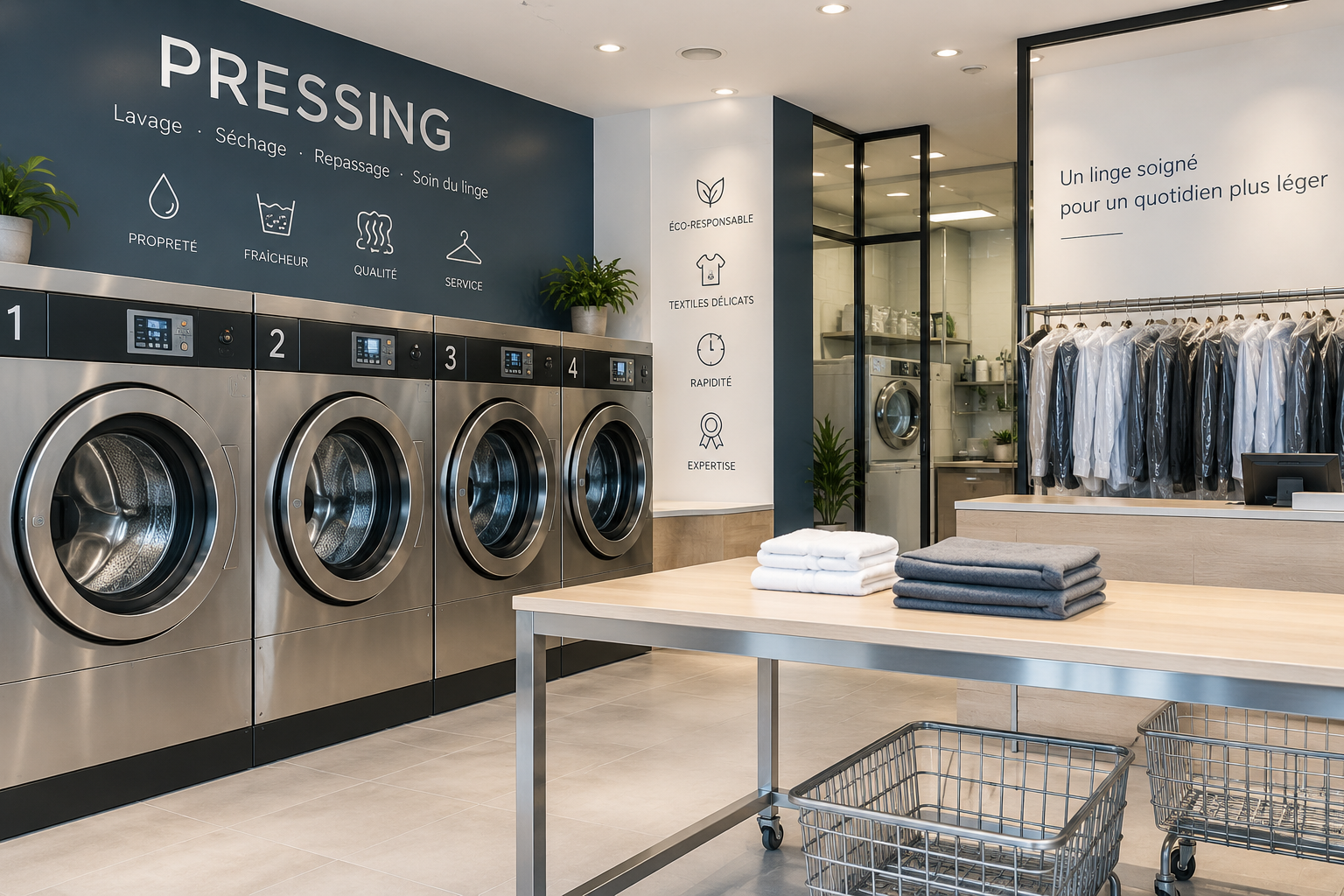

Are you looking to sell or buy a self-service laundrette, dry-cleaning or laundry business (fonds de commerce)? A successful transaction requires a firm grasp not only of the standard rules governing the sale of a business, but also of the constraints specific to these activities: environmental regulations, equipment compliance, the commercial lease, valuation of the equipment and administrative formalities.
Baptiste Robelin, founding partner of Novlaw Avocats, is an expert in the sale of laundrette businesses. He sits on the board of the AFL (Association Française des Laveries automatiques), the trade association of self-service laundrette operators. He advises operators, buyers and investors throughout France on the sale or acquisition of laundrette and dry-cleaning businesses.
Buying or selling a laundrette or dry cleaner: what makes it different?
The sale of a laundrette or dry cleaner should not be approached as the mere sale of a local shop.
These businesses rely on a fleet of machines whose value can represent a significant share of the sale price. They also require specific technical installations and may be subject to the regulations on installations classified for environmental protection (installations classées pour la protection de l'environnement, ICPE).
Before any acquisition, the due diligence should therefore cover in particular:
- the commercial lease and the permitted use of the premises;
- the turnover and profitability of the business;
- the condition, age and value of the equipment;
- maintenance contracts;
- the compliance of electrical installations, drainage and extraction systems;
- the administrative and environmental status of the establishment;
- any employees and contracts attached to the business.
These checks enable the buyer to identify the investments required and the seller to prepare the sale so as to limit difficulties during negotiations.
For details of these checks from the buyer's perspective, see our guide: taking over a self-service laundrette: the legal points to check before buying the business.
Self-service laundrette, dry cleaner and commercial laundry: what are the differences?
The terms "laundrette", "dry cleaner" and "laundry" refer to distinct activities.
The self-service laundrette
A self-service laundrette makes professional washing machines and tumble dryers available to customers. It can operate with few or no staff thanks to a central payment unit, a coin mechanism or a cashless payment system.
When buying a self-service laundrette, the buyer should examine in particular footfall at the premises, the machine fleet, water and energy consumption, maintenance contracts and the technical characteristics of the premises.
The dry cleaner
A dry cleaner cleans and cares for clothing and textiles and may, in particular, use dry-cleaning processes.
The nature of the processes and products used is decisive in assessing the environmental obligations applicable to the establishment.
The commercial laundry
A commercial laundry generally handles larger volumes of linen, often for a customer base of hotels, restaurants, healthcare establishments or other businesses.
Recurring contracts with B2B customers can be an important component of the value of the business.
ICPE regulations for laundrettes and dry cleaners: a key point of the due diligence
Environmental regulation is one of the main points of attention when selling a dry cleaner, laundrette or commercial laundry.
Depending on the nature of the activity, the processes used and the capacity of the installation, the establishment may fall within the ICPE classification (nomenclature des installations classées pour la protection de l'environnement).
Dry cleaning may in particular fall under heading 2345 of the ICPE classification, while certain laundry or linen-washing activities may fall under heading 2340.
The buyer must therefore check precisely which regime applies to the establishment concerned and whether its operation complies with the requirements in force.
Dry cleaners and perchloroethylene
Perchloroethylene, also known as tetrachloroethylene, was long used as a solvent in dry-cleaning machines.
Its use has been subject to tighter regulation, particularly for installations located in premises adjoining premises occupied by third parties.
When acquiring a dry cleaner, it is therefore essential to identify:
- the processes and solvents used;
- the characteristics and age of the machines;
- the declarations and administrative documents available;
- any compliance upgrades already carried out;
- the constraints arising from the configuration of the building.
An environmental irregularity may lead to works, additional investment or administrative procedures that can have a direct impact on the value of the business.
Equipment: a decisive factor in the price of a laundrette or dry cleaner
In the sale of a laundrette business, the equipment is generally a major component of the valuation.
The inventory may include, in particular:
- professional washing machines;
- tumble dryers;
- dry-cleaning equipment;
- central payment units and coin mechanisms;
- contactless payment terminals;
- ironing tables and ironing systems;
- presses and flatwork ironers;
- conveyors and packaging machines;
- air extraction and treatment systems;
- the technical installations required to run the business.
The age, make, state of maintenance and energy consumption of the machines should be examined.
The buyer should also check whether the equipment is actually owned by the seller or is subject to a finance lease, a rental agreement or another financing arrangement.
Finally, maintenance contracts and foreseeable replacement costs should be factored into the economic analysis of the transaction.
The commercial lease of a laundrette or dry cleaner: essential checks
The commercial lease is another key element when buying a dry cleaner or laundrette.
Check the permitted use under the lease
The permitted use clause must allow the activity actually carried on in the premises.
It is therefore necessary to check that the wording of the lease authorises a laundrette, commercial laundry or dry cleaner and, where applicable, the particular processes used by the operator.
Check the technical installations
Running a laundrette or dry cleaner may require:
- a high electrical power supply;
- suitable water supply connections;
- sufficient wastewater drainage capacity;
- ventilation or extraction systems;
- specific fittings for professional machines.
The allocation between landlord and tenant of the cost of works and compliance upgrades should be examined before the deed of sale is signed.
These technical requirements should ideally be set out in the lease. Otherwise, the tenant will struggle to hold the landlord liable for unsuitable premises, as illustrated by our analysis of a judgment of the Rennes Court of Appeal of 13 May 2026 concerning a laundrette connected to a single-phase supply.
Check the conditions for assigning the lease
Article L.145-16 of the Code de commerce (French Commercial Code) restricts clauses that would prevent the tenant from assigning its lease to the buyer of its business.
The lease may nevertheless lay down certain arrangements for the assignment. It is therefore essential to check the clauses on notifying or involving the landlord, as well as any guarantees required.
How is a laundrette business valued?
The valuation of a self-service laundrette or dry cleaner cannot be based on turnover alone.
Several criteria must be considered together.
Turnover and profitability
The analysis covers in particular the trend in turnover, the margin and EBITDA (excédent brut d'exploitation, EBE).
For a self-service laundrette, water, electricity, gas, maintenance and rent costs deserve particular attention.
The location of the laundrette
Location is a key factor, particularly for a self-service laundrette.
Residential density, visibility, accessibility, parking, pedestrian footfall and nearby competition can all have a direct impact on customer numbers.
The condition of the machine fleet
A recent, properly maintained fleet does not have the same value as equipment that will need replacing in the short term.
The buyer should therefore compare the asking price with the cost of the investments it will have to make after the takeover.
Business customers
For a dry cleaner or commercial laundry, recurring commercial relationships with hotels, restaurants, companies or other businesses can account for a significant share of the economic value of the business.
However, the nature and terms of these commercial relationships, and their continuity after the sale, should be examined carefully.
What formalities apply to the sale of a laundrette or dry cleaner?
The sale of a laundrette or dry-cleaning business involves the formalities applicable to the sale of a business, to which activity-specific procedures may be added.
The transaction may in particular require:
- drafting and signing the deed of sale;
- completing the publication formalities;
- tax registration where required;
- managing the sale price and any creditor objections;
- steps relating to the commercial lease;
- administrative formalities relating to the operation of the business and, where applicable, to the ICPE regulations;
- reviewing what happens to the contracts and employees attached to the business.
The exact steps depend on the structure of each transaction and should be identified ahead of the sale.
Sale of the business or sale of the company's shares?
The takeover of a laundrette or dry cleaner can be structured in different ways.
In a sale of a business, the buyer takes over the assets making up the business on the terms set out in the deed.
In a share sale, the buyer acquires the shares of the company that operates the business. The company then remains the holder of its assets, contracts, rights and obligations.
The legal, tax and financial consequences differ. The choice of transaction structure should therefore be considered before making a formal offer to acquire.
Why instruct a lawyer to buy or sell a laundrette or dry cleaner?
Instructing a lawyer specialising in the sale of businesses helps secure each stage of the transaction: preliminary due diligence, negotiation, preliminary sale agreement, conditions precedent, commercial lease, financing, final deed and post-sale formalities.
For a laundrette or dry cleaner, the due diligence must also take account of the technical and environmental specificities of the activity.
Novlaw Avocats advises sellers and buyers on the sale of laundrette, dry-cleaning and commercial laundry businesses throughout France, as it does for other regulated businesses such as pharmacies and bakeries.
Our assistance may cover in particular:
- legal due diligence on the business and the commercial lease;
- analysis of regulatory and environmental issues;
- preparing and negotiating the letter of intent or the preliminary agreement;
- drafting the deed of sale;
- negotiating with the landlord;
- securing the conditions precedent;
- the formalities required to complete the transaction.
Frequently asked questions
Is a self-service laundrette subject to the ICPE regulations?
It depends on the activity actually carried on. A laundry without dry cleaning falls in principle under heading 2340 of the classification of installations, while an establishment offering dry cleaning falls under heading 2345. It is essential to check the applicable regime before any acquisition.
Is perchloroethylene still permitted in dry cleaners?
Its use has been subject to increasingly strict regulation, particularly for installations located in premises adjoining premises occupied by third parties. Before any takeover, the solvent used, the age of the machines and their compliance with the requirements in force should be checked carefully.
Does the sale of the business automatically transfer the administrative authorisations?
No. Authorisations and declarations relating to the operation of the business, particularly under the ICPE regulations, are not automatically transferred with the business. Specific steps must be taken with the authorities so that the business can continue to operate lawfully in the buyer's name.
Can the landlord refuse the assignment of the lease of a laundrette or dry cleaner?
The landlord cannot prohibit the assignment of the lease where it accompanies the sale of the business, pursuant to Article L.145-16 of the Code de commerce. It may nevertheless regulate the assignment, in particular through an approval clause based on objective criteria.
How is the equipment of a laundrette or dry cleaner valued?
Equipment often represents a significant share of the sale price. Its valuation takes into account its age, state of maintenance, energy consumption and how it is held (ownership, finance lease or rental), as well as the foreseeable cost of replacing it.
Should you opt for a sale of the business or a share sale?
The choice depends on the parties' circumstances and has different legal, tax and financial consequences. A share sale transfers, among other things, the debts and commitments of the operating company, which calls for more in-depth due diligence and, where appropriate, a warranty against undisclosed liabilities.
Are you considering buying or selling a self-service laundrette, dry cleaner or commercial laundry? Baptiste Robelin and the Novlaw Avocats team will support you at every stage of your project, from preliminary due diligence to completion of the sale.
Frequently asked questions on
Sale of a business (fonds de commerce)
What should be done if creditors lodge an objection against the sale price of a business?
If the seller's creditors lodge an objection against the sale price of the business (fonds de commerce), the price remains blocked in the hands of the escrow agent (lawyer or notary) until the objections are lifted. If there is a dispute as to whether an objection is well founded, court proceedings may be necessary to have it lifted. The buyer, for their part, cannot be pursued if the statutory publication formalities have been properly completed.
What is the commercial pre-emption right?
The commercial pre-emption right is a tool available to municipalities to combat the decline of town centres and ensure that local shops are maintained. The purpose of this pre-emption right is therefore to maintain or reintroduce diversity in local economic activity.
Can immediate payment of the sale price be requested after the sale of a business?
No. In the sale of a business (fonds de commerce), the seller does not immediately receive the full sale price. The seller must wait until the statutory period for creditors' objections has expired (10 days from the last legal publication). During this period, the price is held in escrow by the lawyer or notary. Only at the end of this period, and if no valid objection has been lodged, can the price be released to the seller.
What are the seller's obligations on the sale of a business (fonds de commerce)?
The seller (transferor) of a business is subject to several obligations: a duty to inform employees in advance where the company has fewer than 50 employees (at least one month before the sale for sales concluded after 27 July 2026), while companies with at least 50 employees that have a social and economic committee (CSE) must inform and consult it; a warranty obligation (warranty against eviction and warranty against latent defects); disclosure of turnover and results for the last three financial years and making the accounting records available (Art. L. 141-2 of the Commercial Code); and the obligation not to set up again within an area in competition with the transferee if a non-reinstatement clause has been agreed.
Can I get prompt assistance with the sale of a business?
Yes. The sale of a business can often require prompt action, in particular where an offer has already been signed or where a sale timetable has been imposed by the parties or the financing bank. Novlaw regularly assists sellers and buyers under tight deadlines and can act at every stage of the transaction, anywhere in France, thanks to the electronic signature of deeds. An initial meeting generally makes it possible to identify the key issues quickly and set a timetable suited to the transaction.
How much does a lawyer charge for the sale of a business?
A lawyer's fees for the sale of a business vary according to the complexity of the case, the value of the transaction and the scope of the assignment. Some lawyers offer a fixed fee covering the entire transaction (audit, negotiation, preliminary sale agreement, final deed and formalities), while others charge on a time-spent basis. A prior quote makes it possible to know the exact cost of the assistance before work on the case begins.
How much are the registration duties on the sale of a business?
Registration duties are payable by the transferee and depend on the sale price: up to €23,000, the transferee is exempt; between €23,000 and €200,000, the duties amount to 3% of the price; above €200,000, they amount to 5%. The transferee must pay these duties within one month of the date of sale or of taking possession of the business, if earlier.
How do you value a business (fonds de commerce)?
The parties may use several valuation methods: the so-called scale method, valuation based on the business's profitability, the comparison method, or the adjusted net asset method. This stage may be subject to negotiation, and it is useful to be assisted by a professional who is familiar with these different methods.
Who pays the lawyers' fees on the sale of a business?
No legal provision imposes any particular allocation of lawyers' fees. In practice, each party generally pays its own adviser's fees. However, the parties frequently agree on a different allocation during negotiations. This issue is often raised in the very first discussions and may be included in the letter of intent or the preliminary sale agreement.
How much does the sale of a business cost?
The cost of selling a business depends on many factors: the value of the business, the complexity of the transaction, whether there is a commercial lease, bank financing, vendor credit, preliminary audits and negotiations between the parties. In addition to the sale price, lawyers' fees, any intermediary fees (specialist agency), registration duties and the costs of administrative formalities should be anticipated. Legal support makes it possible to anticipate these costs and secure the transaction.
What are the stages in the sale of a business?
The sale of a business takes place in several successive stages: valuation of the business, drafting of the deeds (promise or preliminary agreement for sale, followed by the final deed), the formalities following the promise (clearing the municipality's pre-emption right, notifying the landlord if necessary, registering the promise in the case of a unilateral promise), the post-sale formalities, which differ depending on whether one is the transferor or the transferee, publication in a legal announcements journal and in the BODACC at the buyer's initiative, and finally the period of joint tax liability, with the sale price held in escrow.
Planning to sell or buy a laundrette or dry cleaner?
Are you considering buying or selling a self-service laundrette, dry cleaner or commercial laundry? Baptiste Robelin and the Novlaw Avocats team will support you at every stage of your project, from preliminary due diligence to completion of the sale.